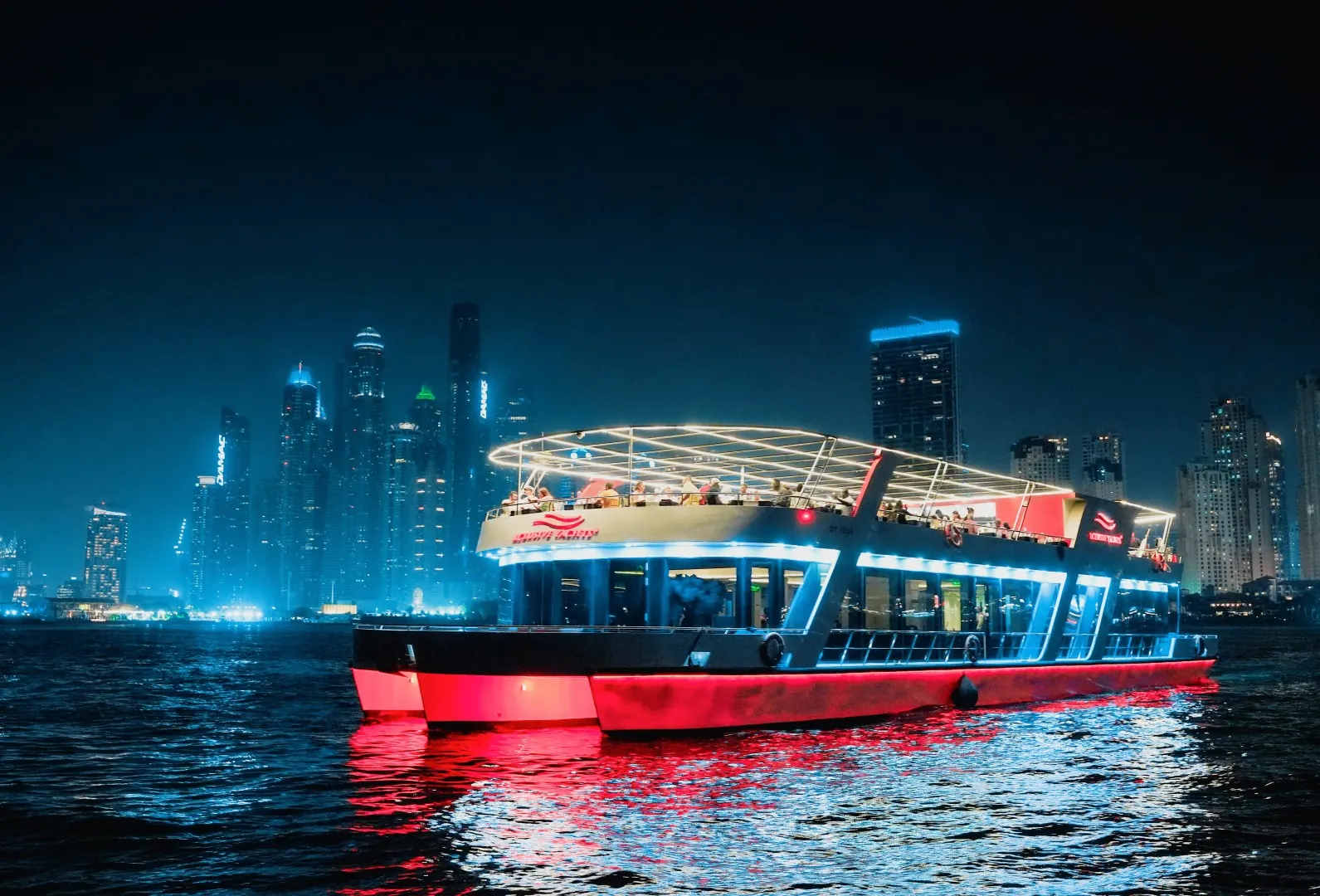
Optimising Yacht Event AV: The Technical Reality at Sea
A technical deep dive into the engineering requirements for professional sound, lighting, and AV production on superyachts in the Arabian Gulf.
We understand that for a technical manager or event producer, a yacht is not simply a venue. It is a floating micro-climate with unique electromagnetic variables, power limitations, and acoustic challenges. Since 2006, Xclusive Yachts has managed the logistical nuances of high-stakes production across the largest privately owned fleet in Dubai. Whether you are rigging a product reveal on the 141ft Stardom or coordinating a live broadcast from the 110ft Icon, success relies on respecting the maritime environment.
The transition from a land-based ballroom to a charter vessel requires a shift in technical strategy. Our fleet, berthed at Dubai Marina and Dubai Harbour, provides a sophisticated canvas, but the sea demands a specific precision that even the most seasoned planners often overlook. Here, we outline the fundamental considerations for sound, light, and power when producing events on the water.
Managing Power and Phase Distribution
Power is the most precious commodity on a yacht. While our vessels, such as the Xclusive 45, can accommodate up to 300 guests for corporate event venue Dubai functions, the on-board generators have fixed capacities. We provide dedicated circuits for production, but understanding the load balance is critical. Unlike a hotel, you cannot simply tap into a wall socket and expect infinite amperage.
Drawing too much power during a high-energy peak can trigger breakers that affect the vessel's propulsion or navigation systems. We work closely with external production teams to audit their power requirements well in advance. Our internal production services team ensures that sensitive AV equipment is isolated from the heavy inductive loads of air conditioning units and galley equipment, preventing digital sync issues or audible hum.
Acoustic Engineering at 15 Knots
Sound behaves differently on the water. The Lack of vertical surfaces means you lose the natural reverb found in indoor venues, but you gain the challenge of wind shear and the constant low-frequency rumble of the engines. When we host a wedding yacht venue Dubai reception on Behike, we prioritise distributed audio systems over high-output point sources. Small, strategically placed speakers provide a more uniform sound field without overwhelming guests standing near the stage.
Radio frequency interference is another variable. As we cruise past the Palm Jumeirah and the Burj Al Arab, the changing proximity to shore-based transmitters can disrupt wireless microphones and IEMs. We recommend using wide-band digital wireless systems and conducting thorough frequency scans at different points along the cruise route to ensure signal stability throughout the evening.
Marine-Grade Lighting and Environmental Factors
Lighting a superyacht requires a balance between aesthetic impact and maritime safety. While we encourage bold, architectural washes, the bridge requires clear visibility for navigation. External wash lights must be positioned to avoid blinding the captain, particularly during docking manoeuvres at Dubai Harbour. Our fleet's exterior lines, especially on the modern 131ft Encore, are designed to catch light elegantly, but the salt air is a constant factor.
Technical managers must ensure all external fixtures are IP-rated. Even on a calm night, the humidity in the Arabian Gulf can cause condensation inside non-sealed units. For a recent technology launch, we deployed a custom LED wall on the aft deck of Stardom. The installation required bespoke bracing to account for the vessel's pitch and roll, ensuring the structure remained stable while the 150 guests moved between levels during the three-hour sunset cruise.
A Case Study in Scale: Xclusive 15
Consider a recent product launch for a global luxury brand hosted on Xclusive 15. The brief required a synchronised light show timed to a four-minute product reveal as the yacht passed the Atlantis The Palm. The guest list was 180, with the main presentation occurring on the upper deck at 20:30.
We coordinated a 24-fixture DMX-controlled lighting rig, powered by a secondary silent generator to ensure zero interference with the main sound system. The audio was time-aligned across three decks, allowing the CEO’s speech to be heard with total clarity despite 18-knot winds. By pre-programming the cues against GPS coordinates, the climax of the lighting sequence occurred exactly as the vessel reached the optimal photo-angle of the coastline, demonstrating why technical maritime experience is non-negotiable.
The Integrated Logistics of Yacht Production
Logistics at the marina are governed by strict windows. Load-in for a major production on Behike or Stardom must be managed with military precision. We facilitate priority access for our production partners at Dubai Harbour, but gear must be modular. Large, monolithic flight cases are difficult to move through companionways. We advise producers to specify compact, high-output equipment that can be safely secured for the duration of the voyage.
Ready to plan yours? Contact our team to discuss the technical specifications of our fleet and how we can support your next high-tier production.
Frequently asked
- Can I bring my own AV company on board?
- Yes, we frequently work with external production agencies. We require a full technical rider and power audit 14 days prior to the event to ensure compatibility with our onboard systems.
- What is the standard power availability on the larger vessels like Stardom?
- While specific loads vary, we generally provide dedicated 32A or 63A three-phase connections for event production, depending on the vessel and the layout of the rig.
- Are there noise restrictions for yacht events in Dubai?
- While we are at sea, we have greater flexibility with volume. However, we must adhere to Dubai Maritime City Authority (DMCA) regulations regarding noise levels when the vessel is berthed or near residential areas like Dubai Marina.